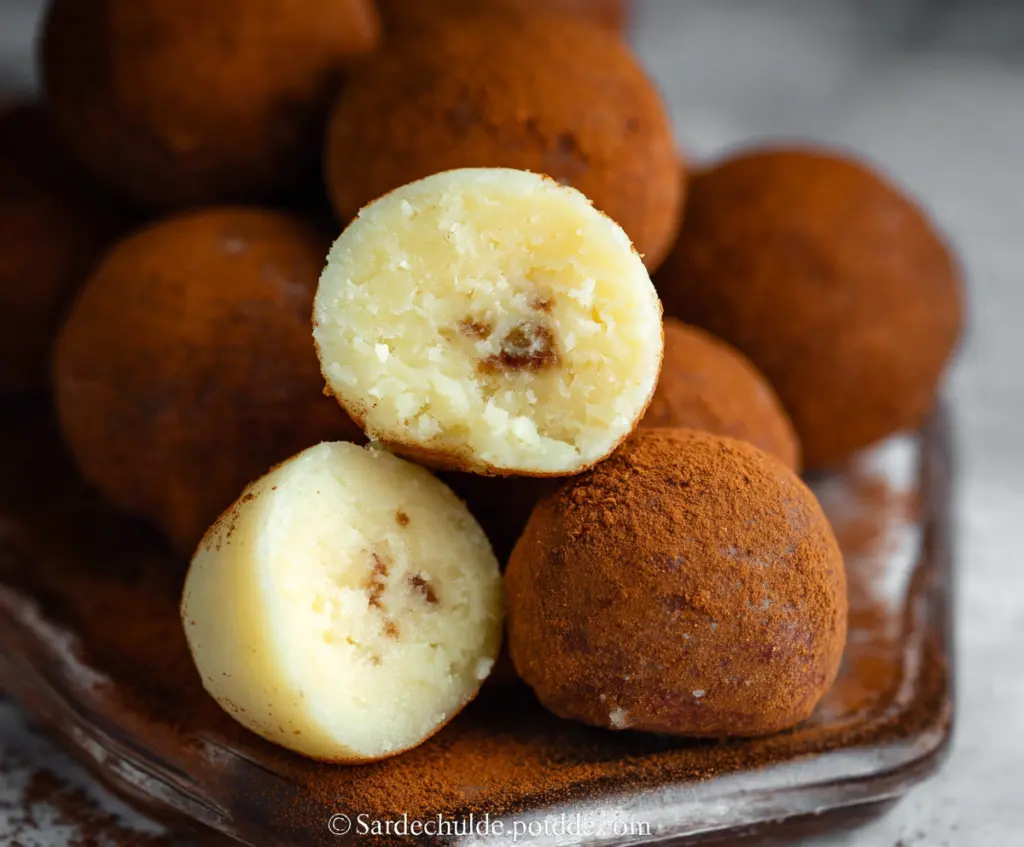
Irish Potato Candy is a sweet treat that looks just like little potatoes but tastes nothing like them! These bite-sized candies are made with a creamy mixture of coconut and cream cheese, then rolled in cinnamon to give them that perfect, dusty potato skin look. They’re fun to make and even more fun to eat, especially around St. Patrick’s Day when everyone loves a little festive snack.
I love how surprising it is—the outside looks earthy and simple, but as soon as you take a bite, the smooth, sweet coconut flavor takes over. I always find it funny to see everyone’s reaction when they realize these “potatoes” are actually candy. It’s like a little delicious prank that everyone appreciates!
My favorite way to serve Irish Potato Candy is on a colorful platter with a few fresh green accents, like mint leaves or green candies, to make it extra festive. It’s a perfect treat to bring to a party or to share with family, especially if you have kids around who enjoy the fun look and sweet taste. Plus, they’re easy to make ahead, so you can prepare them early and enjoy the compliments later!
Key Ingredients & Substitutions
Cream Cheese: This is the base that makes the candy creamy and smooth. Use full-fat for the best texture. You can try a dairy-free cream cheese if you want a vegan version.
Butter: Softened butter helps blend everything together nicely. If you prefer, you can replace it with margarine or coconut oil for a dairy-free twist.
Powdered Sugar: This sweetens and firms up the mixture. If you want a less sweet option, reduce the amount slightly, but keep enough to help the dough hold shape.
Coconut Flakes: Easily the star flavor here. Use sweetened flakes for a sweeter candy or unsweetened if you like a more natural coconut taste. Shredded coconut works, but flakes create a nicer texture.
Vanilla Extract: Adds warmth and depth to the flavor. If you don’t have vanilla, a tiny bit of almond extract can add a nice twist, but use sparingly!
Ground Cinnamon: This coats the balls and gives the “potato skin” look. Use fresh cinnamon for the best aroma and flavor. You can also mix cinnamon with a little cocoa powder for a darker look.
How Can I Shape and Coat Irish Potato Candy Without It Falling Apart?
It’s important that the mixture holds together well when rolling. Here’s how to make shaping easy and neat:
- Make sure the cream cheese and butter are softened so they mix evenly and form a smooth dough.
- If the dough feels too sticky, refrigerate it for 10-15 minutes to firm up before rolling.
- Use lightly greased or damp hands to shape the balls; this prevents sticking.
- Roll the shaped balls gently but completely in cinnamon so the coating sticks well.
- Chill the candy in the fridge for at least an hour to help them firm and keep their shape before serving.
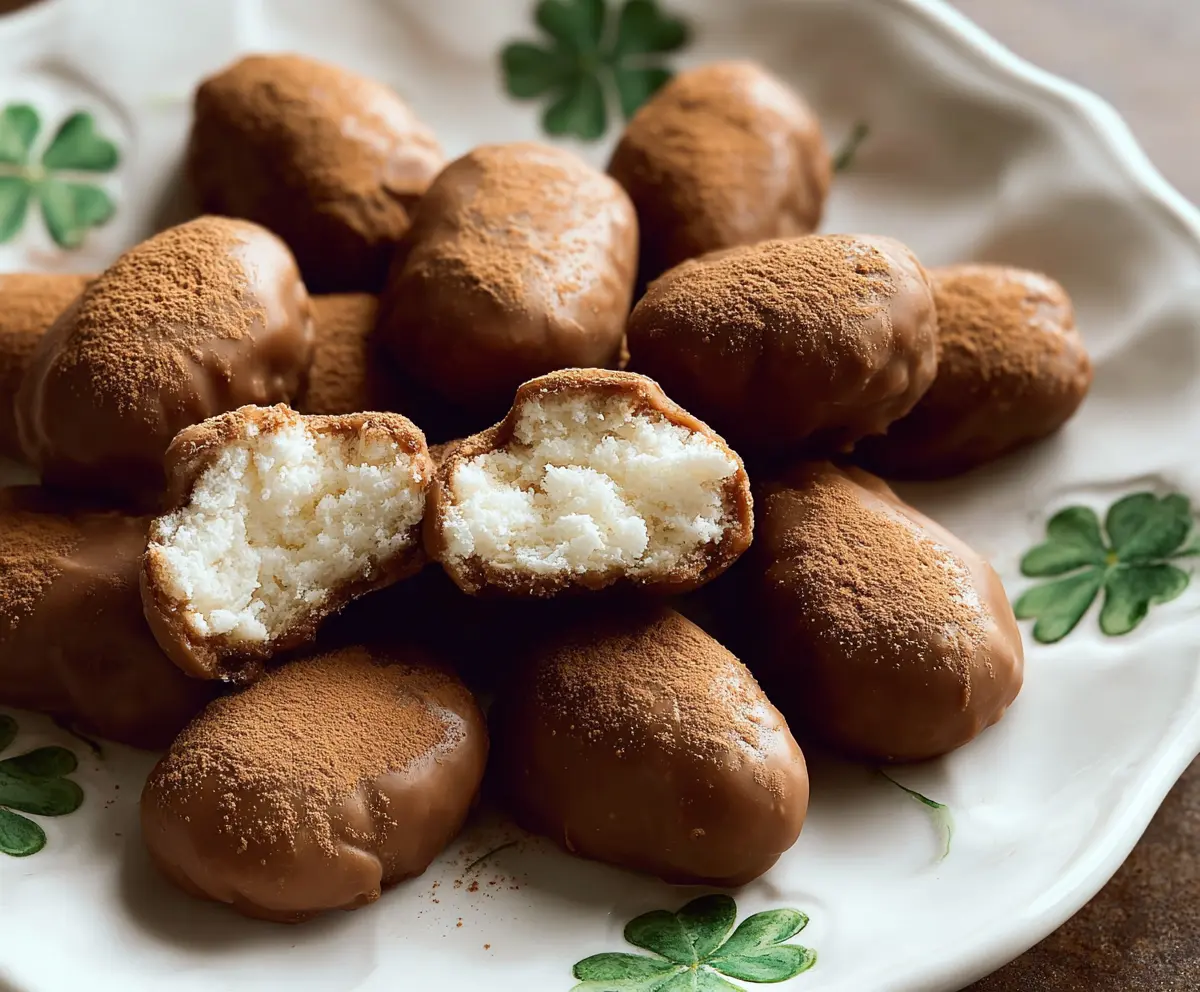
Equipment You’ll Need
- Mixing bowls – I like medium-sized ones for mixing the ingredients easily without splashing.
- Hand or stand mixer – makes blending the cream cheese and butter smooth and quick.
- Measuring cups and spoons – for accurate ingredient portions to get consistent results.
- Small scoop or spoon – helps portion out the mixture evenly for uniform candies.
- Wax paper or parchment paper – to place candies on while chilling and prevent sticking.
- Small bowl of ground cinnamon – for rolling each candy, giving it that authentic “potato skin” appearance.
Flavor Variations & Add-Ins
- Use chopped nuts like walnuts or pecans inside the mixture for added crunch and flavor.
- Add a splash of almond or peppermint extract instead of vanilla for a different aroma and taste.
- Mix in tiny bits of dried fruit like cranberries or apricots for sweetness and texture contrast.
- Try rolling some candies in cocoa powder instead of cinnamon for a chocolate twist.
How to Make Irish Potato Candy
Ingredients You’ll Need:
- 8 oz cream cheese, softened
- 1/2 cup (4 oz) butter, softened
- 2 teaspoons vanilla extract
- 4 cups powdered sugar
- 2 1/2 cups flaked coconut (sweetened or unsweetened, your choice)
- Ground cinnamon, for rolling
How Much Time Will You Need?
This recipe takes about 15 minutes of prep time plus 1 hour of chilling time to let the candies firm up. It’s quick to mix and shape, and the chilling makes rolling them easier and helps them hold their shape for serving.
Step-by-Step Instructions:
1. Mix the Cream Cheese and Butter:
In a large bowl, beat together the softened cream cheese and butter until smooth and creamy. This creates a rich base for your candies.
2. Add Flavor and Sweetness:
Stir in the vanilla extract. Then, gradually add the powdered sugar, mixing gently on low speed until it’s just combined and smooth.
3. Fold in the Coconut:
Mix in the flaked coconut until the mixture becomes thick and holds together like dough. This gives the candy its signature chewy texture.
4. Shape the Candies:
Scoop small portions of the mixture and roll them into bite-sized balls with your hands, shaping them to look like little potatoes.
5. Coat in Cinnamon:
Roll each ball generously in ground cinnamon so they’re completely covered. This creates the “potato skin” look and adds a warm cinnamon flavor.
6. Chill and Serve:
Place the coated candies on a tray lined with parchment paper and refrigerate for at least 1 hour to firm up. Once chilled, serve them cold and enjoy the surprising, sweet treat!
Can I Use Frozen Coconut for Irish Potato Candy?
Yes! Just make sure to thaw it fully and drain any excess moisture before mixing. This helps keep the candy’s texture just right and prevents the mixture from becoming too wet.
How Should I Store Irish Potato Candy?
Store leftovers in an airtight container in the refrigerator for up to one week. Keep them chilled to maintain their shape and freshness.
Can I Make Irish Potato Candy Ahead of Time?
Absolutely! Make the candies and refrigerate them for up to 3 days before serving. Just give them a quick roll in cinnamon again if the coating looks light.
What Can I Use Instead of Ground Cinnamon for Rolling?
If you want a different flavor, try rolling the candies in cocoa powder or a mix of cinnamon and powdered sugar for a sweeter coating.