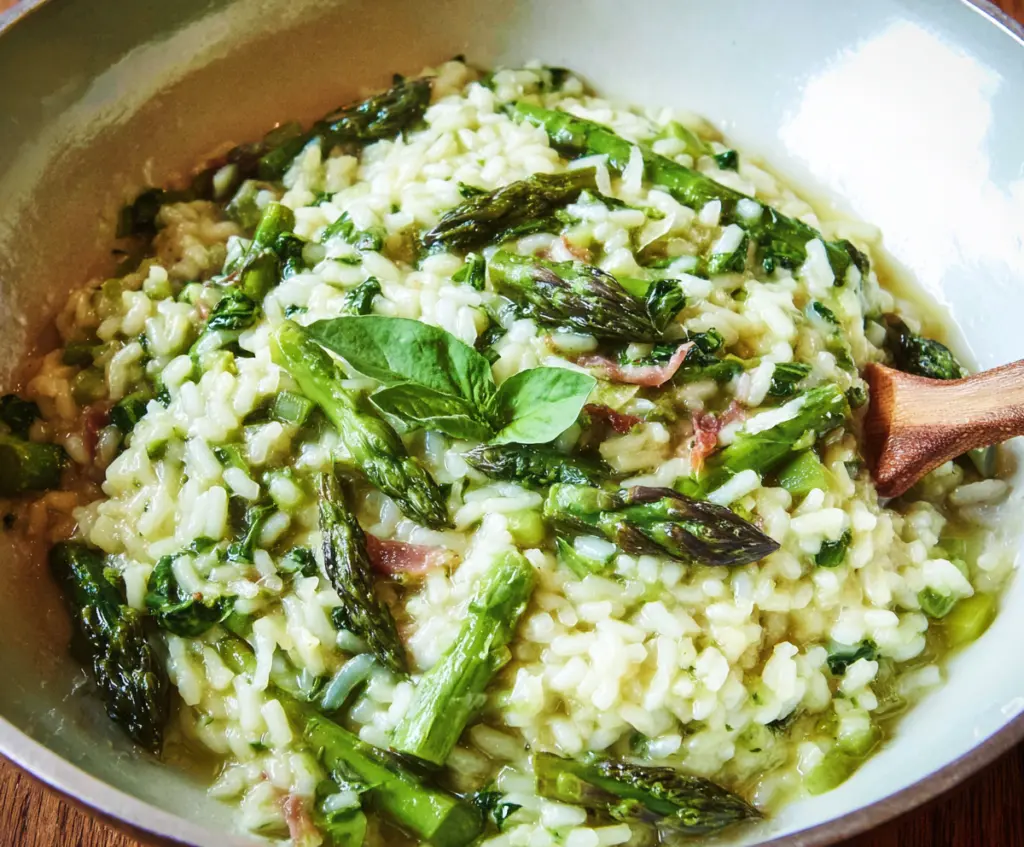
Asparagus Risotto is a creamy, comforting dish that brings together tender, fresh asparagus and rich, cheesy rice cooked just right. The flavors are simple but satisfying, with a smooth texture that feels like a warm hug in every bite. It’s a great way to enjoy the springtime freshest veggies in a meal that feels both fancy and homey.
I love making this risotto when I want to impress without much fuss. Stirring the rice slowly as it absorbs all that flavorful broth is kind of relaxing, and watching the asparagus soften to the perfect crisp-tender stage feels like a little celebration. Adding a bit of Parmesan at the end is my favorite part – it turns everything silky and gives the dish a nice boost of flavor.
I usually serve asparagus risotto as a main dish with a simple green salad on the side, or sometimes as a lovely side to grilled chicken or fish. It’s the kind of recipe that’s perfect for a cozy dinner with friends or a quiet night when you want something special but not complicated. I find that leftovers taste even better the next day after the flavors have had some time to mingle.
Key Ingredients & Substitutions for Asparagus Risotto
Asparagus: Fresh asparagus adds a nice crunch and fresh flavor. If out of season, frozen asparagus works too—just thaw and drain well before cooking.
Arborio rice: This rice is key for creaminess. If unavailable, try Carnaroli or Vialone Nano rice for a similar texture.
Broth: Use vegetable broth for a lighter flavor or chicken broth for richness. Keep it warm to help the rice cook evenly.
White wine: Optional but adds acidity and depth. For no alcohol, simply replace with extra broth or a splash of lemon juice.
Parmesan cheese: Gives a salty, creamy finish. Try Pecorino Romano if you want a sharper taste.
How Do You Get That Perfect Creamy Texture in Risotto?
Risotto’s creaminess comes from slow cooking and constant stirring. Here’s the secret:
- Warm your broth separately to keep the cooking even.
- Add broth little by little, letting the rice absorb it before adding more.
- Stir frequently to release the rice’s starch; this is what creates that creamy texture.
- Don’t rush—this process generally takes 15-18 minutes.
- Finish by stirring in cheese and butter or oil off the heat for a silky texture.
Equipment You’ll Need
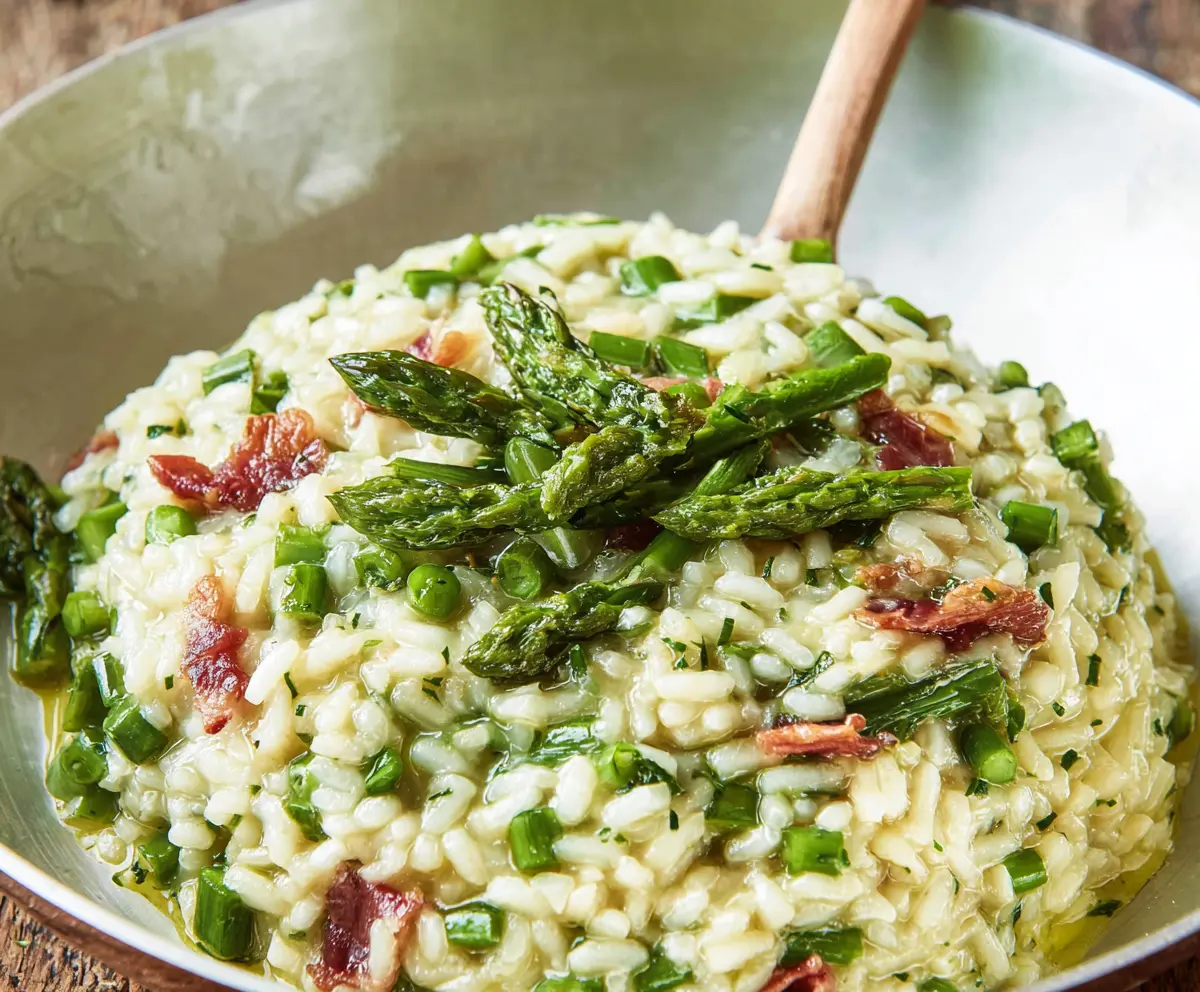
- Large skillet or saucepan – I recommend this because it gives enough space to stir the risotto evenly and helps prevent spills.
- Wooden spoon – It’s perfect for stirring comfortably and scraping the bottom of the pan smoothly.
- Small pot – Use this to keep your broth warm, which makes a big difference in cooking the rice evenly.
- Chef’s knife and cutting board – Handy for trimming asparagus and chopping onion and garlic quickly and safely.
Flavor Variations & Add-Ins
- Swap asparagus for peas or mushrooms for a different veggie twist that still keeps the dish fresh and flavorful.
- Add cooked shrimp or chicken for added protein; it makes the risotto more filling.
- Mix in a bit of lemon zest or a squeeze of lemon juice to brighten the flavors just before serving.
- Try different cheeses like Pecorino Romano or Gruyère for varied salty and cheesy notes.
How to Make Asparagus Risotto
Ingredients You’ll Need:
- 1 bunch asparagus (about 12-15 stalks), trimmed and cut into 1-inch pieces
- 1 cup Arborio rice
- 4 cups vegetable or chicken broth, kept warm
- 1 small onion, finely chopped
- 2 cloves garlic, minced
- 1/2 cup dry white wine (optional)
- 3 tablespoons olive oil or butter
- 1/2 cup grated Parmesan cheese
- 1/4 cup fresh basil leaves (for garnish)
- Salt and freshly ground black pepper to taste
How Much Time Will You Need?
This Asparagus Risotto takes about 30-40 minutes in total. You’ll spend 5 minutes preparing the asparagus and ingredients, then about 25-30 minutes cooking the risotto, stirring and adding broth slowly for that creamy texture. It’s well worth the time!
Step-by-Step Instructions:
1. Cook the Asparagus:
Bring a pot of salted water to a boil. Add the trimmed asparagus pieces and cook for 2-3 minutes until they become tender but still crisp. Drain them and set aside, keeping the tender tips for a pretty garnish later.
2. Sauté Onion and Garlic:
In a large skillet or saucepan, heat 2 tablespoons of olive oil or butter over medium heat. Add the chopped onion and cook for about 3-4 minutes until it’s soft and translucent. Then, stir in the minced garlic and cook for another minute until you smell its lovely aroma.
3. Toast the Rice and Add Wine:
Add the Arborio rice to the pan, stirring it to coat every grain with the nice buttery mixture. Cook it for 1-2 minutes until the edges turn a little see-through. If you’re using white wine, pour it in now and keep stirring until most of it evaporates.
4. Slowly Add Broth & Cook Risotto:
Now comes the slow part! Add warm broth about ½ cup at a time, stirring often. Wait until the rice soaks up most of the liquid before adding more. Keep this up for about 15-18 minutes, until the risotto looks creamy and the rice is tender but still slightly firm inside.
5. Add Asparagus and Finish:
When you’re about halfway done with the broth, stir in the chopped asparagus (except the reserved tips). Once all broth is absorbed and the rice is perfect, take the pan off the heat. Stir in the Parmesan cheese and the last tablespoon of butter or olive oil. Taste and add salt and pepper as you like.
6. Serve and Garnish:
Dish out the risotto while it’s nice and warm. Top with the reserved asparagus tips and sprinkle fresh basil leaves on top for a colorful, fresh finish. Enjoy your creamy, comforting Asparagus Risotto!
Can I Use Frozen Asparagus Instead of Fresh?
Yes! Just thaw the frozen asparagus thoroughly and drain any extra water before adding it to the risotto to avoid making it too watery.
What Can I Substitute for Arborio Rice?
If you can’t find Arborio rice, Carnaroli or Vialone Nano rice are great alternatives and also produce a creamy texture perfect for risotto.
Can I Make Asparagus Risotto Ahead of Time?
You can prepare it a few hours in advance and reheat gently on the stove with a splash of broth to loosen it up. For best texture, enjoy it freshly made!
Is It Okay to Skip the White Wine?
Absolutely! Just replace the wine with an equal amount of warm broth or a splash of lemon juice for brightness—you won’t miss the flavor.